Beyond pain: Why MSK disorders are a top employer cost driver
Nearly 40% of adults experience musculoskeletal (MSK) conditions, which are a leading cause of disability and a top contributor of medical expenses in the U.S.
Limiting a person’s capacity through chronic pain, stiffness and swelling in the bones, muscles, joints and certain connective tissues, musculoskeletal (MSK) disorders are a leading cause of disability worldwide.1
Some of the common conditions that cause chronic MSK pain include injuries, overuse, frequent exertion and repetitive motion, poor posture,2 other chronic conditions like arthritis, obesity3 and cardiovascular disease.4 Often accompanied by debilitating pain, MSK impacts nearly 40% of U.S. adults5 and is a top contributor to employer health care costs.
In fact, an analysis of UnitedHealthcare data on MSK disorders uncovered the following trends:
- MSK costs employers $40.51 per member, per month (PMPM)6
- 6% increase in MSK conditions among UnitedHealthcare members from 2023-20246
- MSK conditions result in an 8% rise in PMPM health care costs7
- MSK conditions are most common among women and Baby Boomers (born 1946-1964)6
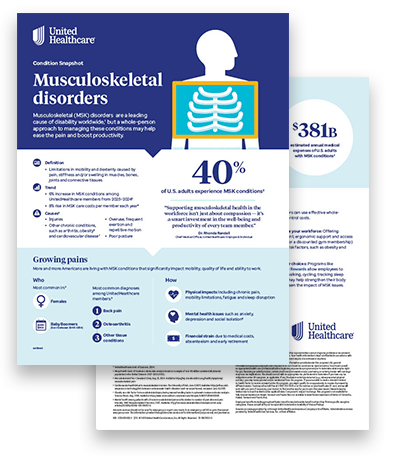
MSK conditions contribute to health care costs for employers, yet they often get overlooked, perhaps because of how common they are. In certain professions, regular shoulder or back pain have become the norm. However, the impact of MSK disorders and conditions can be extensive, costly, and the daily disruption from MSK disorders like chronic pain can lead to decreased productivity and increased likelihood of anxiety, depression or even substance use.8
While the burden of MSK conditions is growing, employers have the capacity to help employees manage these conditions by focusing on a whole-person approach.
Ensure workplace safety and support
Some of the most common MSK conditions, such as lower back pain and arthritis, are often compounded by daily repetitive actions like sitting for prolonged periods of time or lifting and moving heavy objects. Educating employees and putting guidelines in place to ensure any heavy lifting is done safely and effectively in the workplace can be critical to preventing or mitigating the worsening of MSK conditions. Offering regular breaks from this activity throughout the day may also help. For employees with desk jobs, it’s important to ensure they have what they need ergonomically, such as ergonomic chairs and adjustable workstations, and that they are encouraged to take stretch or walk breaks.
Encourage a healthy lifestyle
Encouraging employees to live healthier lives can help lower the risk of MSK conditions or minimize their impact once diagnosed. Employers may want to consider offering discounted gym memberships or wellness programs that reward employees for taking healthy actions and participating in preventive care. For instance, UnitedHealthcare Rewards offers rewards to employees enrolled in eligible plans for reaching physical activity goals, getting an annual checkup and more. Encouraging employees to continuously improve their base-level health can both reduce risk factors for MSK and may help with existing conditions, as well.
Provide specialized care options
Managing MSK conditions can look different based on the stage an individual is in and the severity of their care needs — whether they are just beginning to need support or whether they need conservative care, surgical procedures or ongoing maintenance options.
As such, employers should ensure that their employees have access to a breadth of covered specialists within their network, inclusive of physical or occupational therapists, chiropractors, orthopedists and other relevant providers. But also important is how a carrier’s search experience can help members navigate the many choices within a network, so that they can more easily find providers based on those who may best support their needs and personal preferences.
To complement physical and occupational therapy appointments that may be disruptive to an employee’s work or home life, digital tools like Kaia and Hinge Health may help. These health/wellness vendors, available through UHC Hub® as coaching resources and non-clinical tools, may offer more convenient and personalized pain relief support.
Kaia tracks a person’s movements using AI technology to help ensure they are doing each exercise correctly, providing real-time audio and video feedback for help along the way. That way, employees get a program tailored to their fitness, pain and mobility levels that can help them manage their MSK symptoms.
Similarly, Hinge Health may help by focusing on mind, body and behavioral changes to help employees manage musculoskeletal pain or conditions. By pairing health coaches and wearable digital devices, the app can help support members anytime, anywhere.
Ambulatory surgery centers (ASCs), facilities that provide surgical care and discharge patients in the same day, and Centers of Excellence (COEs), designated facilities that use evidence-based quality of care protocols to deliver cost-effective care for complex medical procedures, may also be valuable to employees when surgical procedures are needed as they can deliver proven quality care and greater potential savings than other sites of care.
Ensure employees have access to cost-effective pain medications
Many MSK conditions necessitate pain medications, contributing to substantial prescription costs, which is why employers may want to consider integrating pharmacy and medical benefits. It’s crucial for employers to regularly review pharmacy coverages and formulary lists and work with a carrier that can ensure employees receive the necessary prescription support at the lowest possible cost for effective pain management that doesn’t break the bank. This process becomes much more streamlined and effective when an employee's pharmacy and medical benefits are seamlessly connected, enabling the carrier to help determine whether the drug should be covered under their medical or pharmacy benefit. This integrated approach not only optimizes care for employees but also helps manage overall health care expenditures more efficiently.
Support the emotional and mental toll of MSK pain
MSK pain doesn’t just take a toll physically. It can also take a toll emotionally and mentally. In fact, living with MSK pain can lead to increased depression and anxiety.8 Employees can become frustrated and saddened by the reality of not being able to do what they enjoy in life due to the burden of MSK conditions. Supporting employees’ behavioral and mental health by offering digital or self-guided resources for lower severity needs as well as talk therapy can be critical to addressing the non-physical effects of MSK conditions.
Help employees manage related medical expenses
The cost of treating and managing MSK conditions and the potential loss of income that can occur if an individual can’t work for a period of time due to the MSK condition can create significant financial stress for employees and their families. Financial wellness benefits, which may include educational tools that improve financial literacy, tax-advantaged financial accounts and financial support for when unexpected medical bills arise or when an employee needs to take short-term disability leave, especially since MSK conditions are a leading cause of disability worldwide, could help employees better manage those costs.
 Share
Share

