Prior authorization made clear:
97.9% of Employer and Individual plan medical claims do not require prior authorization1
For Employer and Individual (E&I) plans, only 2.1% of claims require prior authorization.1 This is in place to help support clinical quality and patient safety. It’s also to confirm the service meets coverage requirements.
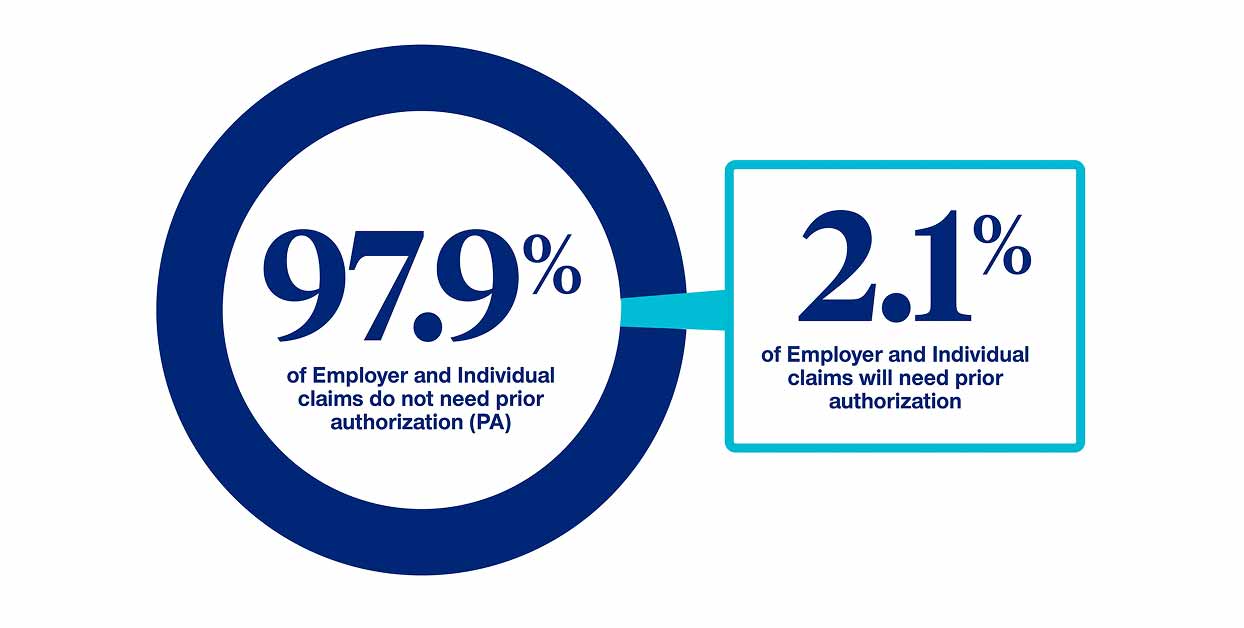
Prior authorization by the numbers
97.9%
of medical claims did not need prior authorization1
Only a fraction of medical claims require prior authorization
88.5%
of prior authorizations were approved2
Almost 9 out of every 10 prior authorizations submitted are approved
24 hrs
is the average time for prior authorization decisions3
Nearly all decisions are made within 1 day
Frequently asked questions about prior authorization for UnitedHealthcare Employer and Individual plans
You may have some questions about the prior authorization process. Review these answers to learn more.
Some procedures are reviewed because they’re widely considered investigational, experimental or unproven. For example, it may apply when therapies are provided as part of a clinical trial. Another example is when there are certain complex surgeries that prompt additional safety and quality review.
Prior authorization can help support high quality, affordable care and reduce surprise costs for members by:
- Confirming coverage requirements before care is delivered
- Checking whether care is provided in the most cost-effective, appropriate, high-quality setting
For example, reviews may help direct care to a more cost-effective setting, such as an ambulatory surgical center instead of an outpatient hospital, when clinically appropriate. Nearly half of all prior authorizations are approved in real-time and almost all decisions are made within 24 hours.4
We regularly evaluate prior authorization requirements and may remove them over time as clinical guidelines become the standard of care and variation in care is reduced. As new evidence becomes available, requirements may also be added or updated. This approach builds on past removals for services that consistently align with evidence-based guidelines and are almost always approved.
For self-funded (self-insured) plans, the employer decides which services require prior authorization, and we administer the benefits they choose.
We always follow applicable federal and state requirements related to the prior authorization process, including mental health parity rules, that help ensure prior authorization is applied fairly and consistently.

Looking for information about prior authorization for prescriptions?
Get the facts about prior authorization for prescription drugs, find answers to your questions and learn how we’re improving the prescription drug prior authorization experience.