Beginner workouts to kickstart your fitness journey
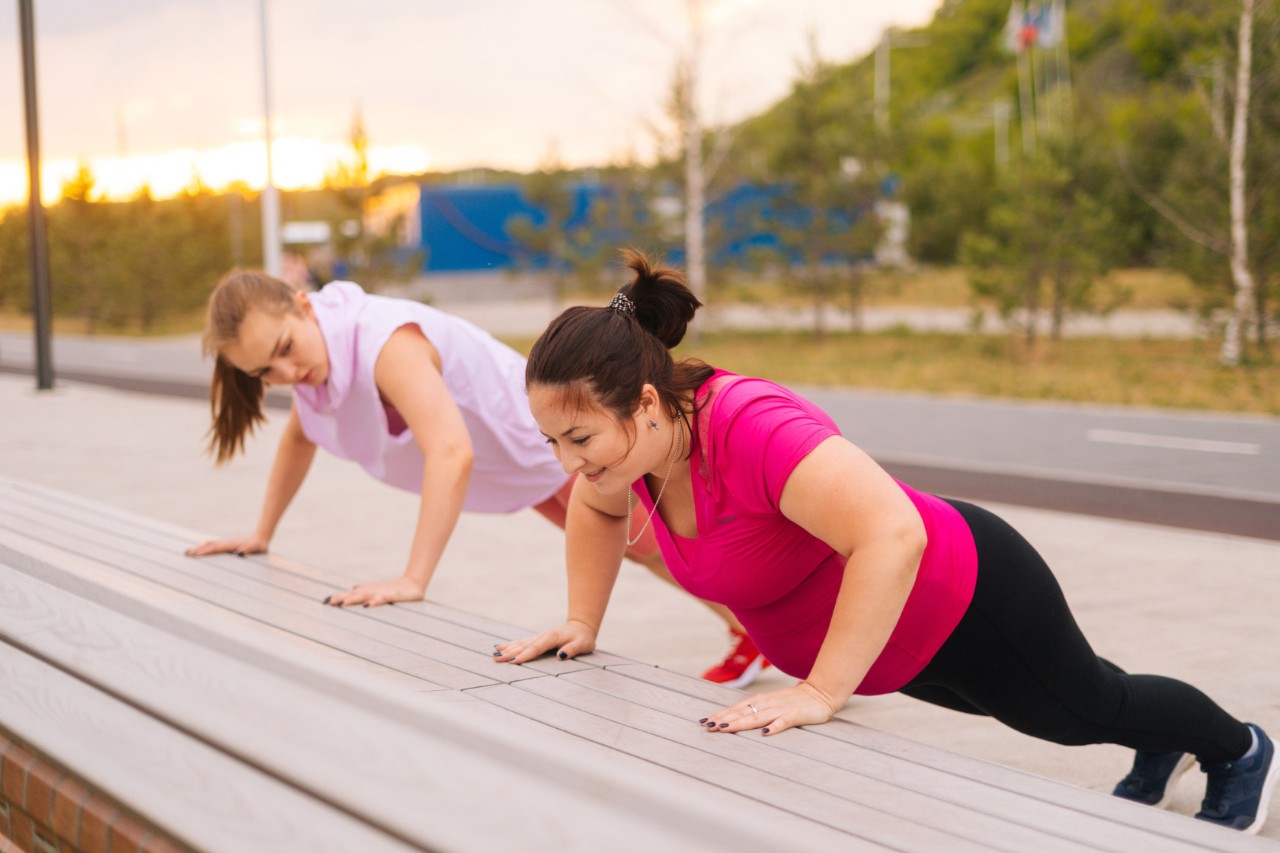
Whether you’re starting a fitness routine for the first time or getting back on track after a long time away, knowing where to start can be difficult. However, realistic goals and a good plan can set you up for success.
There are many benefits to starting an exercise journey. Depending on your routine, regular exercise may help you:1
- Lose excess fat
- Reduce your risk of heart disease or stoke
- Lower your risk of several types of cancer
- Build muscle
- Maintain bone strength
- Live longer
- Improve your mental health
To get the most out of your new exercise routine, make sure to learn a few beginner tips, understand the types of workouts you can do, and make a plan that works for you.
Important fitness tips for beginners
Before you lace up your shoes and head into the gym, make sure you’re ready to face obstacles on your workout journey. These tips can help you avoid some of the common pitfalls of starting a new workout routine:
Take it slow: If you’re excited about starting a new workout plan, you may feel tempted to go as hard or as fast as you can. Instead, try easing your way into your new routine. Increase your effort by no more than 10 percent each week2 For example, if you begin a walking routine, increase your total distance by no more than about 10 percent each week.
Choose exercise you like: Your workout doesn’t have to be a chore. In fact, if you choose something you like, you may be more likely to stick with it. Consider whether you enjoy exercising with others or alone, and whether you prefer to zone out or listen closely to instruction.
Know your why: Take a moment to think about why you want to start your new routine. Knowing your "why"can help you find and keep your motivation.3 For example, if you’re a parent, you may want to prevent diseases so that you can live longer for your kids. If you’re worried about aging well, you may exercise to build strength and prevent falls. Thinking of your “why” may help power you through a tough workout.
Stretching for beginners
Including stretching in your beginner workout routine can improve your flexibility. Better flexibility may help you4:
- Perform better in other physical activities
- Feel better in your daily routine
- Prevent injuries
- Relieve pain and tension
For most people, it’s best to stretch after the rest of your workout. Spend at least five minutes stretching, paying extra attention to any muscle groups that you worked that day.
Push the stretch until you feel tension but not pain. Stretching should not cause pain. Make sure to breathe deeply through your stretches and avoid bouncing.
- Stand or sit with good posture
- Slowly tilt your head to the right, bringing your ear towards your right shoulder
- Hold for 15-30 seconds
- Return to the starting position and repeat on the left side
Tip: Keep your shoulders relaxed and avoid forcing the stretch.
- Stand or sit with your arms at your sides
- Roll your shoulders forward in a circular motion
- Repeat 10-15 times
- Reverse the direction and roll your shoulders backward
Tip: Keep the movement smooth and controlled.
- Stand with one hand against a wall for balance
- Bend one knee, keeping your foot behind you
- Grab your ankle with your hand and gently pull your heel towards your buttocks
- Hold for 15-30 seconds, then switch legs
Tip: Keep your knees close together and avoid arching your back.
- Sit on the floor with your legs straight out in front of you
- Lean forward, reaching for your toes
- Hold for 15-30 seconds
Tip: Keep your knees slightly bent if necessary and avoid bouncing.
Resistance training for beginners
Resistance training is the type of workout that focuses on building muscle. Also called “strength training” or “lifting weights,” these workouts are designed to have you work against some force, like gravity against a weight.5
Each exercise targets a specific muscle or group of muscles, which will strengthen when you repeat the exercise consistently.
Shoulder workouts
Resistance training for your shoulders can help keep these joints safe, strong and stable. Building muscle around the shoulders can help you perform daily tasks, making life easier as you age.
Target: Deltoids (front, middle and rear)
Steps:
- Stand or sit with your back straight, holding dumbbells at shoulder height with your palms facing forward
- Press the dumbbells straight up over your head
- Lower the dumbbells back to the starting position
- Repeat 8-12 times
Tip: Keep your abdominal and back engaged, and avoid arching your back.
Target: Deltoids (side)
Steps:
- Stand with your feet shoulder-width apart, holding dumbbells at your sides with your palms facing your thighs
- Lift the dumbbells out to the sides until they are at shoulder height
- Lower the dumbbells back to the starting position
- Repeat 8-12 times
Tip: Keep your arms straight and avoid swinging the dumbbells.
Target: Deltoids (front)
Steps:
- Stand with your feet shoulder-width apart, holding dumbbells in front of your thighs with your palms facing forward
- Lift the dumbbells forward and up until they are at shoulder height
- Lower the dumbbells back to the starting position
- Repeat 8-12 times
Tips: Keep your core engaged and avoid using momentum.
Abdominal (abs) workouts
Your abdominal muscles, often called “abs,” play a vital role in many daily activities. Strengthening your abs can help you improve your balance, stability, and athletic performance.6 Best of all, many beginner ab exercises require no special equipment or gym membership.
Target: Entire core (abs, obliques and lower back)
Steps:
- Start in a push-up position with your hands shoulder-width apart and your arms straight
- Engage your core and maintain a straight line from head to heels
- Hold the position for 20-60 seconds, breathing naturally
- Lower yourself down carefully to avoid straining your back
Tip: Keep your hips level and avoid letting your back sag or arch.
Target: Rectus abdominis and obliques
Steps:
- Lie on your back with your hands behind your head and your knees bent
- Lift your shoulders off the ground and bring your left elbow to your right knee as you straighten your left leg
- Repeat on the other side, bringing your right elbow to your left knee
- Continue alternating for 8-12 times on each side
Tip: Focus on rotating your torso rather than just moving your elbows.
Target: Lower abs
Steps:
- Lie on your back with your arms at your sides and legs straight
- Lift your legs off the ground, keeping them straight
- Raise your legs until they are perpendicular to the ground
- Lower your legs back down slowly to the starting position
- Repeat 8-12 times
Tip: Avoid arching your back by engaging your core.
Chest workouts
Exercises that build muscle in your chest can help you increase your upper body strength. Chest workouts for beginners work the pectoralis muscles.
Target: Pectoralis major
Steps:
- Start in a plank position with your hands shoulder-width apart and your arms straight
- Lower your body until your chest nearly touches the ground
- Push back up to the starting position
- Repeat 8-12 times
Tip: Keep your core engaged and maintain a straight line from head to heels.
Target: Pectoralis major
Steps:
- Lie on a flat bench with your feet planted firmly on the ground
- Hold a dumbbell in each hand with your palms facing forward
- Press the dumbbells upwards, extending your arms fully
- Lower the dumbbells back down to the starting position
- Repeat 8-12 times
Tip: Keep your core engaged and avoid arching your back.
Target: Pectoralis major
Steps:
- Lie on a flat bench with your feet planted firmly on the ground
- Hold a dumbbell in each hand with your arms extended to the sides
- Lift the dumbbells out to the sides, keeping a slight bend in your elbows
- Bring the dumbbells together above your chest
- Lower the dumbbells back down to the starting position
- Repeat 8-12 times
Tip: Focus on squeezing your chest muscles as you bring the dumbbells together.
Arm workouts
Your arm muscles work hard throughout the day. You can help protect your bones, gain stability, and make daily life easier by increasing arm strength with arm workouts.
Target: Biceps
Steps:
- Stand with your feet shoulder-width apart and hold dumbbells with your palms facing forward
- Keeping your upper arms still, curl the dumbbells up towards your shoulders
- Lower the dumbbells back down to the starting position
- Repeat 8-12 times
Tip: Focus on squeezing your biceps at the top of the curl.
Target: Triceps
Steps:
- Sit on the edge of a sturdy chair with your hands gripping the edge
- Lower your body by bending your elbows until your arms are bent at a 90-degree angle
- Straighten your arms to return to the starting position
- Repeat 8-12 times
Tip: Keep your back close to the chair and avoid swinging.
Target: Triceps
Steps:
- Stand with your feet shoulder-width apart and hold a dumbbell overhead with both hands
- Lower the dumbbell behind your head by bending your elbows
- Raise the dumbbell back to the starting position
- Repeat 8-12 times
Tip: Keep your core engaged and avoid arching your back.
Leg workouts
Your legs require strength to keep you mobile and active. As you age, having adequate leg muscle can help keep you safe from falls.
Target: Quadriceps, hamstrings and glutes
Steps:
- Stand with your feet shoulder-width apart and toes facing forward or slightly outward
- Lower your body down into a squat, keeping your back straight and knees behind your toes
- Push through your heels to return to the starting position
- Repeat 8-12 times
Tip: Keep your weight in your heels, not your toes, and avoid letting your knees extend past your toes.
Target: Calf muscles
Steps:
- Stand on the edge of a step or curb with your heels hanging off the edge
- Raise up onto your tiptoes, then lower back down to the starting position
- Repeat 12-15 times
Tip: Use a slow and controlled motion to target the calf muscles effectively.
Steps:
- Lie on your back with your knees bent and feet flat on the floor
- Lift your hips up towards the ceiling, squeezing your glutes at the top
- Lower your hips back down to the starting position
- Repeat 8-12 times
Tip: Keep your core engaged and avoid arching your back.
What are low-impact cardio workouts for beginners?
Regular cardio, also known as “aerobic exercise,” is a healthy part of a balanced workout routine. Low-impact cardio is easy on the joints, making these types of exercises excellent for beginners. Here are five types of cardio you can include in your routine:
Intensity: Low to moderate
Description: Walking quickly at a pace of 3-4 miles per hour or faster. You can do this outdoors or on a treadmill.
Benefits: Easy on the joints, improves cardiovascular health, and boosts mood.
Intensity: Low to high (depending on resistance and pace)
Description: Riding a stationary bike or cycling outdoors. You can adjust the resistance to suit your fitness level.
Benefits: Improves leg strength, cardiovascular health, and can be done indoors or outdoors.
Intensity: Low to moderate
Description: Dancing to your favorite music or following dance workout videos. You can choose styles like Zumba or hip hop.
Benefits: Fun way to get moving, improves coordination and burns calories.
How should I track progress after starting a fitness routine?
Knowing your goals can help you track your progress as you move along your fitness journey. For example, if you are exercising to lose weight, regular weigh-ins can help you track your progress.
However, stepping on the scale is not the only way to keep track of progress, and losing weight is not the only measure of success. Consider these ways of tracking success:
- Workout log: Keep a journal or use a mobile app to record your workouts, including exercises, sets, reps and weight lifted
- Progress photos: Take regular photos to track visual changes in your body
- Measurements: Record your body measurements, such as waist circumference or body fat percentage
- Performance metrics: Track your performance in specific exercises, like running distance or time
- How you feel: Monitor changes in your energy levels, mood and overall well-being
When you’re new to exercising, continuing to show up is success in its own right. Make sure to congratulate yourself on every workout you complete.
When should I increase the intensity of my workouts?
As you continue to exercise, workouts that used to be difficult may start to feel easy. You may notice that you’re able to talk during what was once a challenging cardio routine. You may easily lift weights that felt nearly impossible before.
When your workout begins to feel too easy you may be ready to increase the intensity of your workouts. You can increase weight, distance or other measures of intensity. .
If you’re not sure, talk to a medical professional or trainer. They can help you modify your workout plans as you progress.
Tips for sticking with a workout routine
Like many people, you may have tried a workout routine before but stopped after a few weeks. That’s ok. Sticking to an exercise plan can be difficult. These tips can help:
- Set realistic goals. Start by trying to exercise two or three times per week
- Use your calendar and set your workout times like meetings
- Choose activities that you enjoy
- Workout with someone or find an accountability buddy
- Be patient with yourself. Don’t expect perfection
With the right mindset and a good plan, you can stick to your workout plan and achieve your goals.
 Share
Share

